NeighborhoodsNeighborhood area
Bolognina
Neighbourhood streets, art and live music · Bologna
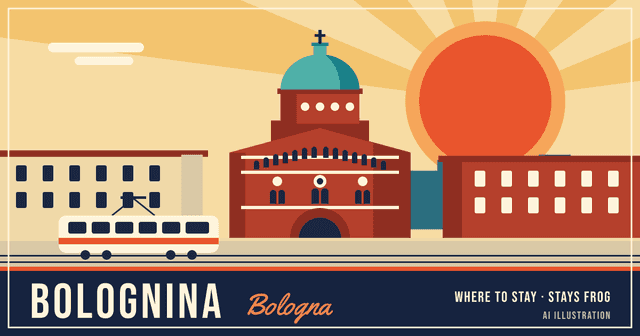
Choose Bolognina for good-value stays by the station, market aperitivo and gigs at Locomotiv, in Bologna's most multi-ethnic neighbourhood.
Just across the tracks from Bologna Centrale, Bolognina is a grid of ochre and red workers' streets with the Ustica memorial museum, aperitivo among the Via Albani market stalls and gigs at Locomotiv Club. Young, cosmopolitan and cheaper than the centre, it suits repeat visitors and fairgoers.
How it scores
- Food
- 8/10
Trattoria di Via Serra cooks with Apennine produce, and the Via Albani market turns into an aperitivo spot among the stalls
- Nightlife
- 8/10
Gigs at Locomotiv Club in the Dopo Lavoro Ferroviario park, plus outdoor summer films at the Arena Puccini
- Shopping
- 6/10
The Via Albani market and everyday shops on the residential streets around Piazza dell'Unità
- Walkability
- 7/10
Via Matteotti and Piazza dell'Unità are a short walk from the station and centre, but the area stretches far north
- Transit
- 8/10
Buses 11, 25 and 27 at Sacro Cuore, a Bolognina entrance to the high-speed station, and the Marconi Express from Centrale
- Coolness
- 8/10
Street art, the Ustica memorial museum with Boltanski's 81 lights, the Shoah Memorial and the tiled Circolo Hex
- Safety
- 6/10
Busy and ordinary by day; quieter at night, so keep to Via Matteotti or Via Stalingrado and watch bags near the station
- Loudness
- 7/10
Much quieter than the centre at night, apart from gigs at Locomotiv Club and summer films at the Arena Puccini
Each category is scored 1-10 by our editors; the Frog Score is their average. Safety is our editors' judgment of how comfortable it is to walk around, not crime statistics. Loudness runs from library quiet (1) to never sleeps (10) and doesn't count toward the Frog Score. How we score
Our take
Bolognina is the neighbourhood on the far side of the tracks from Bologna Centrale, a grid of late-19th-century streets built for the railway and factory workers of a growing city. Its ochre, orange and red apartment blocks line straight streets that meet at Piazza dell'Unità, and the brick church of the Sacro Cuore, its 60-metre dome visible from the station, rises on Via Matteotti just past Porta Galliera. Today it is young, cosmopolitan and changing fast: foreign residents make up more than a quarter of the population, Bologna's Chinese community grew up along Via Ferrarese, and street art and music venues sit alongside the old cooperative housing.
It suits budget-minded travellers, repeat visitors who have done the centre, music fans and anyone with business at the fair or an early train. Savhotel Fiera on Via Ferruccio Parri, a modern four-star on the Casaralta side, is a nine-minute walk from the fairgrounds and congress centre and has a monitored indoor garage. Bolognina covers almost 5 square kilometres and stretches north to the ring road, so check the exact address: the streets around Via Matteotti and Piazza dell'Unità keep you a short walk from the station and the historic centre.
Bologna Welcome's art walk follows streets named after painters and sculptors and takes in the Shoah Memorial, two 10-metre steel blocks facing each other near the station, the tiled 1970s Circolo Hex on Via Corticella, and the Museo per la Memoria di Ustica in the old Zucca tram depot, where the reassembled wreck of the DC-9 lost off Ustica on 27 June 1980 is surrounded by Christian Boltanski's installation of 81 lights, one for each victim. For food, the market on Via Albani turns into an aperitivo spot among the stalls, with street food and wine, and Trattoria di Via Serra on Via Luigi Serra is a small trattoria of about 35 seats run by Tommaso and Flavio, who cook with dairy, flour and potatoes from Apennine producers; it opens for lunch from Tuesday to Saturday and for dinner from Wednesday to Saturday, and does not take online bookings. After dark, Locomotiv Club in the Dopo Lavoro Ferroviario park on Via Sebastiano Serlio hosts gigs, the Cineteca's Arena Puccini screens films outdoors there in summer, and the Villa Angeletti park is a green break on the western side.
From the historic centre, walk out through Porta Galliera and over the railway on Via Matteotti, or use the high-speed station's Bolognina entrance; Locomotiv is about 11 minutes on foot from Bologna Centrale, and buses 11, 25 and 27 stop at Sacro Cuore. Bologna's first tram line, due from 2027, will run up Via Matteotti with stops at Giacomo Matteotti–Stazione AV, Piazza dell'Unità and Zucca–Museo Ustica, and a second line will head north through Piazza dell'Unità to Corticella. The Marconi Express to the airport leaves from Bologna Centrale and takes about seven minutes. By day Bolognina is an ordinary, busy residential neighbourhood of markets, schools and shops. At night it is much quieter than the centre: keep to lit main streets such as Via Matteotti, Via di Corticella and Via Stalingrado, keep bags close around the station and on buses, and take a taxi if you are heading to the northern edge late.
By Stays Frog AI Desk
A short history
Until the late 19th century the land north of the walls was open country crossed by the old roads to Galliera and Mascarella; Bolognina was born with the 1889 town plan and grew as a working-class manufacturing district beside the railway, home to engineering and rolling-stock works such as the Officine Minganti and the Officine Casaralta. Many of its ordered streets of ochre, orange and red blocks, rarely more than three or four storeys high, were built by the Risanamento housing cooperative founded by the Marquis Livio Zambeccari. Allied bombing hit the area hard in 1944, and on 15 November that year partisans fought the occupying Nazi and Fascist forces in the Battle of the Bolognina around Piazza dell'Unità. Here on 12 November 1989 Achille Occhetto announced the svolta della Bolognina, the turn that led to the dissolution of the Italian Communist Party. As the factories closed from the 1990s, offices, the city's new administrative headquarters in Piazza Liber Paradisus and a new entrance to the high-speed station arrived, and newcomers from around the world made it one of Bologna's most multi-ethnic neighbourhoods.
No places in Bolognina scored yet.
Traveller reviews
What people who've been say. One review each; you can update yours.
References(14)
Primary sources used to check this guide and its listings.
- Bolognina: a workmanlike neighbourhood - Bologna Welcome · Official tourism authority
- Trattoria di Via Serra · Venue operator
- Dove siamo – Locomotiv Club – Bologna · Venue operator
- Savhotel Fiera: Hotel 4 stelle Fiera di Bologna · Venue operator
- Comune di Bologna former 18-zone subdivision — Bolognina · Official municipal GIS / Istat; CC BY 4.0
- Safety and security - Italy travel advice - GOV.UK GOV.UK · UK Foreign, Commonwealth & Development Office
- Bolognina - Wikipedia · Wikipedia
- Chiesa del Sacro Cuore di Gesù (Bologna) - Wikipedia · Wikipedia
- Il Museo per la memoria di Ustica (press annex, June 2024) · Regione Emilia-Romagna
- Aperitivo time a Bologna - Bologna Welcome · Official tourism authority
- Fondazione Cineteca di Bologna · Venue operator
- Bologna Centrale railway station - Wikipedia · Wikipedia
- Marconi Express - Bologna Airport to city centre · Airport shuttle operator
- Tram Bologna - Linea Rossa map and works · Comune di Bologna tram project