NeighborhoodsNeighborhood area
Mokošica
Suburban streets and residence heritage · Dubrovnik
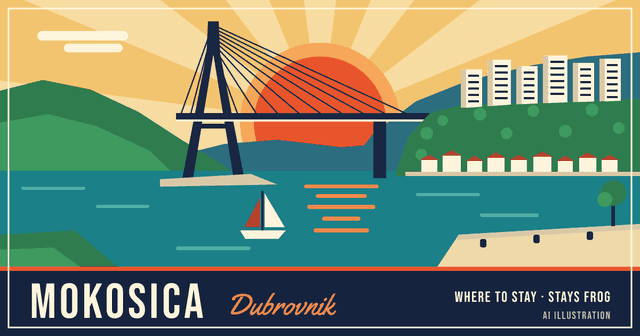
Choose Mokošica for a quiet, good-value residential base above Rijeka Dubrovačka, with direct buses to Pile and the coast road on the doorstep.
A residential suburb about 7 km west of the city on the Rijeka Dubrovačka inlet, split between the waterside old village with its konoba and noble summer residences and the hillside blocks of Nova Mokošica, linked to Pile by buses 1A and 1B.
How it scores
- Food
- 5/10
The konoba and cafés of the old village plus bakeries in Nova Mokošica; Gruž and the old town are a bus ride away
- Nightlife
- 3/10
A few cafés in the old village and Nova Mokošica; for bars and late nights take the bus into the old town
- Shopping
- 4/10
Everyday shops, bakeries and a post office in Nova Mokošica, handy for self-catering rather than browsing
- Walkability
- 5/10
Shops cluster in Nova Mokošica on the hillside above the old waterside village; take care on the fast coast road
- Transit
- 6/10
Libertas lines 1A and 1B run about 9 km to Pile; check the last bus home before a late dinner in town
- Coolness
- 6/10
Bunić, Ranjina and Zuzorić summer residences, and the Gučetić-Đurđević, seat of the nobles' last council in 1814
- Safety
- 7/10
Quiet and safe day and night; take ordinary care with valuables, use a taxi app late and watch the fast coast road
- Loudness
- 4/10
Quiet residential streets day and night; the old village by the water is calmer than the blocks of Nova Mokošica
Each category is scored 1-10 by our editors; the Frog Score is their average. Safety is our editors' judgment of how comfortable it is to walk around, not crime statistics. Loudness runs from library quiet (1) to never sleeps (10) and doesn't count toward the Frog Score. How we score
Our take
Mokošica is the first large suburb on Dubrovnik's western outskirts, a residential district about 7 km from the city that climbs from the water of Rijeka Dubrovačka, the long, fjord-like inlet fed by the Ombla, towards bare limestone hills. It has two faces. Old Mokošica is a waterside village with a small shipyard, a konoba, a few cafés and the stone summer residences of Ragusan nobles; Nova Mokošica is the hillside of apartment blocks built since the 1980s, with its school and sports hall, kindergarten, clinic, post office, shops and bakeries. Around 8,000 people live in the wider district and most of them commute into town, so this is everyday Dubrovnik rather than a tourist quarter.
Mokošica suits budget-minded travellers, longer stays, families who want space and shops close by, and visitors with a car who are heading up the coast as well as into the old town. This is a residential district rather than a hotel one, so expect private apartments and rooms, and compare the exact street: the old village by the water is quieter and more picturesque, while Nova Mokošica puts you closer to the shops and services. It is the least touristy base in the city and one of the cheapest, with the trade-off that the old town, the beaches and the nightlife are a bus ride away.
The sights here are quiet ones. The city counts five summer residences of the Bunić, Ranjina and Zuzorić families in Mokošica, and the most important, the Gučetić-Đurđević residence, is where Dubrovnik's nobility held their last council in 1814; nearby is the Zamanjić residence with its small chapel, and in neighbouring Petrovo Selo stand the ruins of the medieval church of St Pancras. Public access is not guaranteed, so admire them from outside. A few kilometres up the inlet, Komolac has the ACI marina and the spring of the Ombla, and from the marina the tourist board's riverside path follows the water past stone houses to the summer residences of Rožat. Eating and drinking is local: the konoba and cafés of the old village and the cafés and bakeries of Nova Mokošica, with Gruž and the old town's restaurants a bus ride away.
Libertas city lines 1A and 1B connect Mokošica with Pile, the old town's western gate, on a route of about 9 km, and the suburb sits just above the Adriatic coast road towards Split, so drivers can head up the coast without crossing the city. The Franjo Tuđman Bridge carries that road across the mouth of the inlet near the port of Gruž, where the main bus station and the ferries are. The airport is 22.5 km from the city, a 30 to 35 minute drive that can take up to an hour in summer; the airport shuttle bus ends at the Gruž bus station, from where you continue by city bus or taxi. Check the timetable for the last buses home before a late dinner in town.
Mokošica is a quiet, safe residential area by day and at night. Crime in Croatia is low and violent crime rare, so the precautions are ordinary ones: do not leave valuables unattended, and at night use a taxi app or send a friend the taxi number, as the UK government suggests. Traffic on the coast road is fast, so take care walking along it, especially after dark. In hot, dry summers wildfire is a real risk on the hillsides above the suburb, and outdoor fires and barbecues are banned from 1 June to 31 October except in designated areas.
By Stays Frog AI Desk
A short history
Mokošica, the first large settlement on Dubrovnik's western outskirts, takes its name, according to the city, from Mokoša, a Slavic goddess of fertility and protector of women. In the 16th century Ragusan noble families including the Bunić, Ranjina and Zuzorić built summer residences here above the inlet of Rijeka Dubrovačka, and the most important of them, the Gučetić-Đurđević residence, hosted the last council of the Dubrovnik nobility in 1814. For centuries it stayed a small waterside village of a few hundred people, until from the early 1980s the apartment blocks of Nova Mokošica rose on former olive groves, vineyards and fields. From November 1991 until 26 May 1992, during the Homeland War, the area was occupied by the Yugoslav People's Army and allied volunteer units. Since then it has grown into one of Dubrovnik's main residential districts, home to more than 8,000 people in the wider ward, with its own schools, clinic and shops.
No places in Mokošica scored yet.
Traveller reviews
What people who've been say. One review each; you can update yours.
References(12)
Primary sources used to check this guide and its listings.
- Dubrovnik local self-government and ward profiles · Grad Dubrovnik
- GUP city-ward GIS polygons — code 8 · Grad Dubrovnik municipal GIS
- GUP explanatory document — numbered ward tables, PDF pages 142–143 · Dubrovnik-Neretva County spatial-planning institute
- Libertas current city timetable · Libertas Dubrovnik
- Croatia current visitor safety guidance · UK Foreign, Commonwealth & Development Office
- Mokošica · Wikipedia (Croatian)
- Gruž: main residential areas of Dubrovnik · Wikipedia
- Natural sites: Rijeka Dubrovačka, the Ombla and the Sorkočević summer residence · Dubrovnik Tourist Board
- Dubrovnik for active vacation: Lapad peninsula and Rijeka Dubrovačka walks · Dubrovnik Tourist Board
- Franjo Tuđman Bridge (Dubrovnik) · Wikipedia
- Kako do nas: getting to and from Dubrovnik Airport · Zračna luka Dubrovnik (Dubrovnik Airport)
- Dubrovnik Airport shuttle bus: stops at Ploče gate and Gruž bus station · Platanus (Dubrovnik Airport shuttle operator)