NeighborhoodsNeighborhood area
Sacromonte
Cave settings and live flamenco · Granada
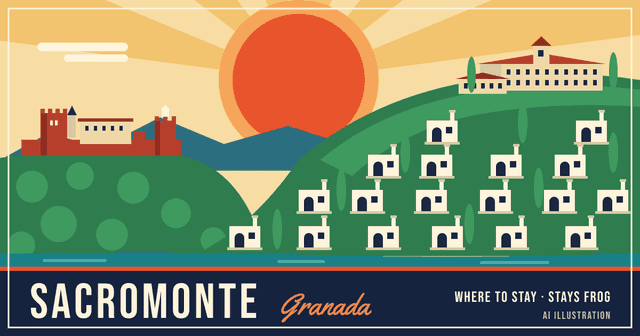
Come for zambra in the caves, the cave museum and Alhambra views; most travellers are better off sleeping in the Albaicín below.
A steep hillside of whitewashed cave homes facing the Alhambra across the Darro, long the home of Granada's Gitano flamenco. Come up for zambra at Cueva de la Rocío, the Museo Cuevas del Sacromonte and the Abbey, then sleep in the Albaicín below.
How it scores
- Food
- 6/10
Few places to eat; Cuevas Los Tarantos sells dinner-and-show packages, but eat in the Albaicín for choice
- Nightlife
- 8/10
Nightly Zambra Gitana at Cueva de la Rocío and hour-long shows in Cuevas Los Tarantos' three caves; book ahead
- Shopping
- 4/10
Next to no shops; the cave museum shows the old trades of weaving, pottery, basketry and the forge
- Walkability
- 5/10
Steep, uneven lanes off the Camino del Sacromonte; about 15 minutes' walk from the centre, all uphill home
- Transit
- 5/10
C34 minibus from the cathedral area to near the cave museum; private cars are restricted, the metro is across town
- Coolness
- 9/10
Zambra in the caves, the Museo Cuevas del Sacromonte, the Abbey's Santas Cuevas and views of the Alhambra
- Safety
- 7/10
Calm and friendly by day; very quiet off the Camino after dark, so walk down with the crowd or take a taxi; mind bags at viewpoints
- Loudness
- 7/10
Show crowds along the Camino del Sacromonte in the evening; the other lanes are very quiet after dark
Each category is scored 1-10 by our editors; the Frog Score is their average. Safety is our editors' judgment of how comfortable it is to walk around, not crime statistics. Loudness runs from library quiet (1) to never sleeps (10) and doesn't count toward the Frog Score. How we score
Our take
Sacromonte climbs the Valparaíso hill on the north side of the Darro valley, facing the Alhambra across the river. Many of its homes are caves dug into the slope, each with a vertical whitewashed front, an arched door and as many rooms as the hillside allowed, so no two are alike, strung along lanes and terraces among the cypresses. Long the home of Granada's Gitano community and the cradle of the city's flamenco, it is still a lived-in neighbourhood rather than an open-air museum, with families, artists and cave venues sharing the paths off the Camino del Sacromonte.
It suits travellers who come for flamenco, views and a side of Granada most day-trippers never see, and who don't mind steep walks and few services. This is not a hotel district: most visitors sleep in the Albaicín or around Plaza Nueva below and come up for an evening show, which is the easiest way to enjoy it. If you do book a room on the hill, check exactly where the address sits, because the upper lanes are a long, steep climb and the walk home after a show is all uphill.
Start at the Museo Cuevas del Sacromonte in the Barranco de los Negros, eleven original caves kept as they were to show cave life and the old trades of weaving, pottery, basketry and the forge, with rooms on the roots of flamenco and Gitano culture and a lookout facing the Alhambra. Higher up, the Abbey of Sacromonte, begun in the early 17th century where the relics of San Cecilio and the forged lead books were found, has an arcaded cloister, the underground chapels of the Santas Cuevas and a museum opened in 2010; it is still the parish church, with Sunday Mass at noon. Evenings belong to the zambra, cave flamenco inspired by Gitano rituals such as weddings: Cueva de la Rocío on the Camino del Sacromonte, founded in 1951, stages a nightly Zambra Gitana, and Cuevas Los Tarantos, a family-run tablao founded in 1972 at the foot of the camino, puts on an hour-long show in three old caves, with dinner and transport packages. Book ahead, eat first in the Albaicín if you want choice, and treat other caves as private homes, not attractions.
The cave museum puts the walk from the city centre at about 15 minutes, and the C34 minibus runs from the cathedral area up into Sacromonte, stopping near the museum. Access for private cars to the Albaicín and Sacromonte historic quarter is restricted, so come on foot, by bus or by taxi; the railway station and Metro Line 1 are across the centre to the west. By day the lanes feel calm and friendly, but they are steep and uneven, and away from the Camino del Sacromonte they are very quiet after dark. After a late show, walk down with the crowd on the main camino, use the venue's transport or call a taxi rather than exploring the upper paths, and keep phones and wallets out of sight at the busy viewpoints, where Spain's travel advice warns that thieves use distraction tricks.
By Stays Frog AI Desk
A short history
Sacromonte grew on the Valparaíso hill above the Darro, outside the city walls and beyond the reach of the city and church authorities, where cave homes are thought to have been dug from the 16th century, after the conquest of 1492 and the expulsion of Granada's Jewish and Muslim populations. It became the traditional quarter of the city's Gitano (Romani) community, whose zambra dances and cave tablaos made it known as the cradle of Granada's flamenco. In 1595 relics attributed to San Cecilio and the so-called lead books were reported found on the hill, and Archbishop Pedro de Castro built the Abbey of Sacromonte on the spot in the early 17th century, although the books were later declared forgeries. After heavy rain in the winter of 1962–63 damaged the caves, more than 4,000 residents were moved out and rehoused in districts such as the Zaidín, Haza Grande and La Chana, and the hillside lost much of its population. Newer residents have since restored caves, the Museo Cuevas del Sacromonte opened in 2002, and in 2016 the Darro valley was declared a Site of Cultural Interest.
No places in Sacromonte scored yet.
Traveller reviews
What people who've been say. One review each; you can update yours.
References(10)
Primary sources used to check this guide and its listings.
- A trip through Granada's three most historical neighbourhoods · Primary official area / operator source
- INICIO | Cuevas Los Tarantos · Primary official area / operator source
- OpenStreetMap administrative neighbourhood — Sacromonte · OpenStreetMap contributors, ODbL 1.0; boundary source tag Ayuntamiento de Granada
- Safety and security - Spain travel advice - GOV.UK · UK Foreign, Commonwealth & Development Office — current visitor-safety guidance
- Sacromonte · Wikipedia (en)
- Sacromonte (Granada) · Wikipedia (es)
- Abadía del Sacromonte · Wikipedia (es)
- Museo Cuevas del Sacromonte — official website · Museo Cuevas del Sacromonte
- Cómo llegar — Museo Cuevas del Sacromonte · Museo Cuevas del Sacromonte
- Transportes Rober (Granada urban buses, line C34 Sacromonte – Centro) · Wikipedia (es)