NeighborhoodsNeighborhood area
Santa Croce
Arrival-side streets, craft and dining · Venice
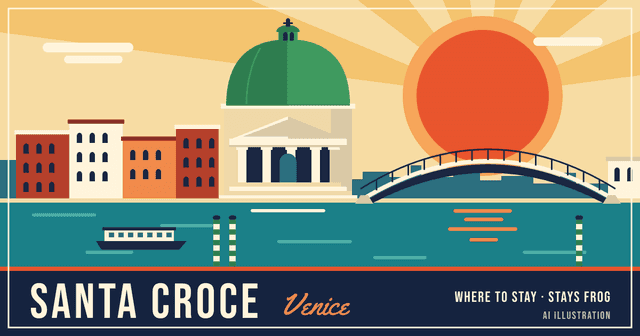
Choose Santa Croce for easy arrivals by bus, car or train, quiet residential lanes and Ca' Pesaro, at lower prices than the centre.
Santa Croce starts at Piazzale Roma's airport buses and fades east into quiet campi around San Giacomo dall'Orio, with Ca' Pesaro's Klimt and the Fondaco dei Turchi's dinosaurs on the Grand Canal; a calm, good-value base for travellers with heavy bags or early flights.
How it scores
- Food
- 8/10
Osteria La Zucca's daily seasonal vegetable menu near Campo San Giacomo dall'Orio; book tables for one or two by phone
- Nightlife
- 5/10
Inner lanes go quiet and dark late at night; Campo dei Tolentini is a meeting place for Venetians
- Shopping
- 7/10
Velvets still woven at Tessitura Luigi Bevilacqua, visits by reservation, and fabric history at Palazzo Mocenigo
- Walkability
- 7/10
Ponte della Costituzione to the station and a walk to the Rialto from San Stae; San Marco is a long walk away
- Transit
- 8/10
Piazzale Roma buses to Marco Polo and Treviso airports, People Mover to Tronchetto, and water bus lines 1, 2 and 3
- Coolness
- 7/10
Klimt and Kandinsky at Ca' Pesaro, dinosaur skeletons at the Fondaco dei Turchi and San Zan Degolà's old frescoes
- Safety
- 6/10
Residential lanes feel calm day and night; pickpockets target travellers with luggage at Piazzale Roma and the station
- Loudness
- 5/10
Piazzale Roma is a busy bus and car hub; lanes around San Giacomo dall'Orio and San Stae are quiet, especially late
Each category is scored 1-10 by our editors; the Frog Score is their average. Safety is our editors' judgment of how comfortable it is to walk around, not crime statistics. Loudness runs from library quiet (1) to never sleeps (10) and doesn't count toward the Frog Score. How we score
Our take
Santa Croce is the sestiere most travellers see first. Its western end is Piazzale Roma, the bus station and car parks at the end of the road bridge from the mainland, and the only part of historic Venice where cars and buses can drive. Walk east, though, and it turns into one of the least touristed corners of the city, a quarter of narrow lanes, small campi and Grand Canal palaces that the national tourism board calls a true cross-section of Venetian life.
It suits arrivals and departures, travellers with heavy bags or early flights, and anyone who wants a quieter, more residential base at lower prices than the centre. Stay near Piazzale Roma or Campo dei Tolentini for the airport buses and an easy walk over the Ponte della Costituzione to the trains, or around San Giacomo dall'Orio and San Stae for a neighbourhood feel within walking distance of the Rialto. The trade-off is that San Marco is a long walk or a water-bus ride away, and the streets right around Piazzale Roma are a transport hub rather than a postcard.
Facing the station across the Grand Canal, the green-domed church of San Simeon Piccolo is the first monument most arrivals see. Further in, San Giacomo dall'Orio has a wooden ceiling shaped like an upturned ship's keel and Venetian Renaissance paintings, and San Zan Degolà, one of the oldest churches in the area, holds the oldest frescoes in the city. On the Grand Canal, Longhena's baroque Ca' Pesaro houses the International Gallery of Modern Art, with works by Klimt, Kandinsky and Matisse, and the Museum of Oriental Art upstairs, while the Fondaco dei Turchi is now the Natural History Museum, with two complete dinosaur skeletons. Palazzo Mocenigo tells the history of fabric and costume, and Tessitura Luigi Bevilacqua still weaves velvets here, with visits to its weaving rooms by reservation only. Campo dei Tolentini is a meeting place for Venetians, and the Papadopoli Gardens are a green spot to rest and look out over the water. For a meal, Osteria La Zucca, in Venice since 1980 and a few steps from Campo San Giacomo dall'Orio, cooks a daily-changing menu built on seasonal vegetables, with some meat dishes too; tables for one or two are booked by phone.
Getting around is Santa Croce's strength. Piazzale Roma is Venice's main bus station, with ATVO and ACTV route 5 buses to Marco Polo airport and buses to Treviso airport; the People Mover runs to the Tronchetto car parks, and the Ponte della Costituzione crosses the Grand Canal to Santa Lucia station. Water buses leave Piazzale Roma for Rialto and San Marco (line 2), the Lido (line 1) and Murano (line 3). The residential lanes feel calm by day and at night; the places to watch are Piazzale Roma and the station, busy transport hubs where pickpockets target travellers with luggage, so keep bags zipped and close. Late at night the inner lanes are quiet and dark, so plan your route home with a map, and on high-water days check the tide forecast, as parts of the city flood and water-bus routes change.
By Stays Frog AI Desk
A short history
Santa Croce, like neighbouring San Polo, grew out of the Luprio, a marshy area of salt pans on the western side of the city that was gradually reclaimed, and it is named after the church of Santa Croce, demolished in the first half of the 19th century after Napoleon's suppressions. Its eastern half is still largely medieval, with old churches such as San Zan Degolà and San Giacomo dall'Orio, and along the Grand Canal stand some of the city's great palaces: the Fondaco dei Turchi housed Venice's Ottoman merchants from the early 17th century until 1838, and Ca' Pesaro, begun by Baldassare Longhena in 1659 for the Pesaro family, was left to the city by Duchess Felicita Bevilacqua La Masa in 1898 to become a modern art museum. In the 20th century the sestiere changed more than any other: the road bridge to the mainland, opened in 1933 as the Ponte Littorio and now the Ponte della Libertà, brought Piazzale Roma, the Rio Novo, the Stazione Marittima and the Tronchetto car park island to its western edge, on land largely reclaimed in that century. Santiago Calatrava's Ponte della Costituzione joined Piazzale Roma to the railway station in 2008, and the People Mover to Tronchetto followed in 2010.
No places in Santa Croce scored yet.
Traveller reviews
What people who've been say. One review each; you can update yours.
References(14)
Primary sources used to check this guide and its listings.
- Sestiere Santa Croce: district in Venice to visit - Italia.it · Official tourism authority
- Contatti - Tessitura Luigi Bevilaqua · Venue operator
- Home - Osteria La Zucca - Venezia · Venue operator
- OpenStreetMap named neighbourhood/sestiere outline — Santa Croce · OpenStreetMap contributors, ODbL 1.0
- Safety and security - Italy travel advice - GOV.UK GOV.UK · UK Foreign, Commonwealth & Development Office
- Santa Croce (Venice) · Wikipedia
- Sestiere di Santa Croce · Wikipedia (Italian)
- Ca' Pesaro · Wikipedia
- Fondaco dei Turchi · Wikipedia
- Ponte della Costituzione · Wikipedia
- Piazzale Roma · Wikipedia
- San Simeone Piccolo · Wikipedia
- AVM/Actv water bus service: winter timetable 2026-2027 · AVM/Actv (Venice public transport operator)
- Venice Marco Polo Airport · Wikipedia