NeighborhoodsNeighborhood area
Creative Quarter
Design shopping and south-city lanes · Dublin
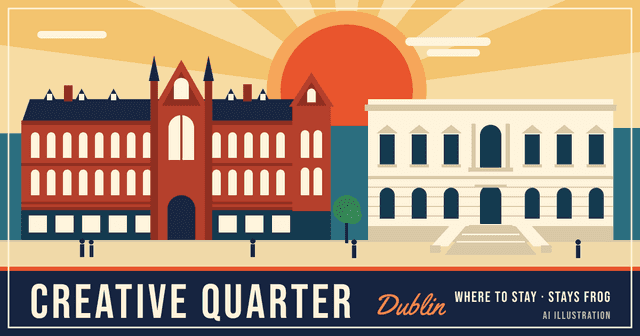
Choose it for a first trip built around shopping, cafés and walking everywhere, with Grafton Street and the Creative Quarter's independent lanes on your doorstep.
Dublin's south-city shopping core, where pedestrian Grafton Street meets the independent design shops of Drury Street and South William Street. Browse Powerscourt Townhouse and George's Street Arcade, then stop for coffee at Bewley's.
How it scores
- Food
- 9/10
Coffee and buns at Bewley's on Grafton Street, Umi Falafel in George's Street Arcade and tapas at The Port House
- Nightlife
- 8/10
Wine bars, pubs and tapas fill South William Street after the shops close, plus The Sidecar's Art Deco cocktails
- Shopping
- 9/10
Brown Thomas on Grafton Street, Powerscourt Townhouse, the Irish Design Shop on Drury Street and George's Street Arcade
- Walkability
- 9/10
Everything is walkable: Trinity College, Temple Bar and St Stephen's Green are a few minutes from Grafton Street
- Transit
- 8/10
Luas Green Line at St Stephen's Green, Dawson, Trinity and Westmoreland; Dublin Express stops at Trinity College
- Coolness
- 9/10
Old merchants' houses on South William Street, the 1881 George's Street Arcade and Harry Clarke glass at Bewley's
- Safety
- 7/10
Busy and well lit by day and evening; watch for pickpockets around buskers, and keep to lit streets over side lanes late
- Loudness
- 8/10
Buskers on Grafton Street by day; bars along George's Street and the lanes get noisy on weekend nights
Each category is scored 1-10 by our editors; the Frog Score is their average. Safety is our editors' judgment of how comfortable it is to walk around, not crime statistics. Loudness runs from library quiet (1) to never sleeps (10) and doesn't count toward the Frog Score. How we score
Our take
This is the shopping heart of Dublin's south city. Grafton Street, pedestrianised and lined with department stores, high-street chains and buskers, runs downhill from St Stephen's Green towards Trinity College, and just west of it lie the narrow streets of the Creative Quarter, which Tourism Ireland places between South William Street and George's Street and between Stephen Street Lower and Exchequer Street. The two halves feel quite different: Grafton Street is big-brand and busy, while Drury Street, South William Street and the little lane of Castle Market are a tight grid of independent boutiques, design stores, galleries, cafés and bars in old merchants' houses that were once the centre of the city's clothing trade.
It suits first-time visitors, shoppers and anyone who wants to step out of the door into the middle of things, with Trinity College, Temple Bar and St Stephen's Green all a few minutes' walk away. The Westbury, a four-star hotel with Grafton Street at its front door and the Creative Quarter behind it, is the landmark stay, with an Art Deco cocktail bar, The Sidecar, and an all-day brasserie, Balfes. Grafton Street ranks among the most expensive shopping streets in the world to rent on, and hotel prices around it are firmly central-city, so budget travellers usually stay further out and walk in.
Start at Powerscourt Townhouse, Viscount Powerscourt's 1770s mansion on South William Street, now a speciality shopping centre over three floors with Irish-made homewares, jewellery, a gallery for emerging artists, the Pepper Pot Café and cocktails on Pygmalion's sheltered benches. Drury Street has the Irish Design Shop for contemporary Irish pottery, textiles and prints and Industry & Co for furniture, ceramics and a café-deli, and Castle Market links it to Powerscourt. On the western edge, the red-brick, Victorian Gothic George's Street Arcade has traded since 1881, with vintage clothes, second-hand books, art, jewellery and food counters such as Umi Falafel. On Grafton Street itself, Bewley's has served coffee and sticky buns under Harry Clarke stained-glass windows since 1927, and Brown Thomas sells designer fashion and high-end homewares. When the shops close, the side streets fill up with wine bars, pubs and tapas at places such as The Port House on South William Street.
Everything here is walkable. The Luas Green Line stops at St Stephen's Green and Dawson at the southern end and at Trinity and Westmoreland to the north, with a straight run to O'Connell Street and the north side, and Dublin Express coaches from Dublin Airport stop at Trinity College and Temple Bar; Aircoach and Dublin Bus also serve the airport. Grafton Street and the streets around it are among the more comfortable parts of the city by day and in the evening, when they stay busy and well lit. The main nuisance is pickpocketing in crowds, so keep bags closed around the buskers and in packed shops. Late at night, stick to the lit, busier streets rather than quiet side lanes, use licensed taxis, and expect noise from the bars along George's Street and the lanes on weekend nights.
By Stays Frog AI Desk
A short history
The lanes between Grafton Street and South Great George's Street grew up in the late 17th and early 18th centuries: South William Street was laid out in 1676, and Grafton Street was developed from a country lane from 1708 and named after Charles FitzRoy, 2nd Duke of Grafton. In 1774 Richard Wingfield, 3rd Viscount Powerscourt, moved into the grand townhouse Robert Mack had designed for him on South William Street, a street that still keeps one of the city's largest groups of 18th-century merchants' houses and was later the heart of Dublin's rag trade. On the western edge, the South City Markets opened in 1881 as Dublin's first purpose-built Victorian shopping centre; destroyed by fire in 1892, they reopened in 1894 and trade today as George's Street Arcade. Grafton Street, first a fashionable residential street, had become mainly commercial by the late 19th century, gained Bewley's café in 1927 and was pedestrianised for good in 1982. Powerscourt House was turned into a shopping centre between 1978 and 1981, and in 2012 the streets around South William Street were rebranded as Dublin's Creative Quarter, known for independent design shops, fashion and cafés.
No places in Creative Quarter scored yet.
Traveller reviews
What people who've been say. One review each; you can update yours.
References(12)
Primary sources used to check this guide and its listings.
- Dublin’s Best Shopping Streets and Districts · Official tourism / municipal source
- Official map: Royal Exchange B · Dublin City Council / Smart Dublin, CC BY
- How Safe Is Dublin? A Local Guide for Tourists · DoDublin visitor operator
- Grafton Street · Wikipedia
- South William Street, Dublin · Wikipedia
- George's Street Arcade · Wikipedia
- Powerscourt Townhouse Centre: about and history · Powerscourt Townhouse Centre
- Dublin's quarters · Tourism Ireland
- The Westbury Hotel · Fáilte Ireland / Visit Dublin
- Discover Dublin's Most Romantic Restaurants · Fáilte Ireland / Visit Dublin
- Luas · Wikipedia
- Dublin buses to and from Dublin Airport · daa / Dublin Airport