NeighborhoodsNeighborhood area
The Liberties
Medieval heritage, antiques and brewing history · Dublin
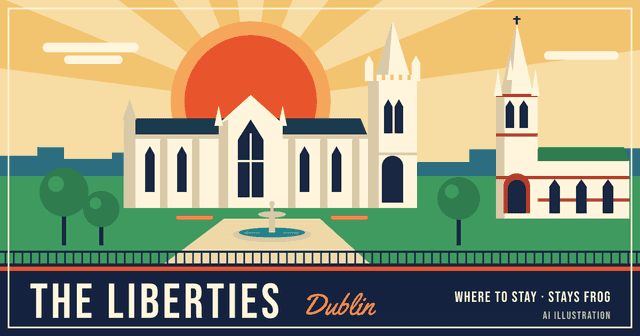
Choose the Liberties for cathedrals, distilleries, antiques and old-Dublin character at better prices, a short walk from the centre.
Dublin's historic working-class quarter in the south-west inner city, running from St Patrick's Cathedral along Thomas Street to the Guinness Storehouse. Browse the antique dealers on Francis Street and tour the Teeling or Roe & Co distilleries.
How it scores
- Food
- 8/10
Michelin-starred Variety Jones on Thomas Street, leather armchairs at Two Pups Coffee and Hen's Teeth's café-gallery
- Nightlife
- 7/10
Gigs at the 1,500-capacity Vicar Street, the Gravity Bar at the Guinness Storehouse and distillery tastings
- Shopping
- 8/10
Francis Street antique dealers such as O'Sullivan's and Johnston Antiques, and local produce at Hen's Teeth
- Walkability
- 8/10
St Patrick's Cathedral is about ten minutes on foot from Grafton Street, Temple Bar and Dublin Castle
- Transit
- 7/10
Luas Red Line at James's by the Guinness Storehouse, Heuston Station to the north and Dublin Express at Usher's Quay
- Coolness
- 8/10
Marsh's Library, St Patrick's Cathedral, stretches of the 12th-century city wall and whiskey stills old and new
- Safety
- 7/10
Busy and safe by day; some side streets go very quiet after dark, so keep to Thomas Street, Patrick Street and the quays
- Loudness
- 7/10
Quieter at night than Temple Bar; busiest around Vicar Street gigs and the Thomas Street market streets by day
Each category is scored 1-10 by our editors; the Frog Score is their average. Safety is our editors' judgment of how comfortable it is to walk around, not crime statistics. Loudness runs from library quiet (1) to never sleeps (10) and doesn't count toward the Frog Score. How we score
Our take
The Liberties is the historic working-class heart of south-west inner Dublin, stretching west from St Patrick's Cathedral along Thomas Street and Meath Street to the Guinness brewery at St James's Gate. Medieval walls, a 300-year-old library, market streets, antique shops and whiskey stills give it more texture than anywhere else in the centre, and a new wave of distilleries, cafés and restaurants has joined the old family businesses without smoothing away its character. It is real, sometimes scruffy and very Dublin.
It suits history lovers, whiskey and stout pilgrims and travellers who like a lived-in neighbourhood within walking distance of the centre. The Hyatt Centric The Liberties on Dean Street, one of the city's newest hotels, has more than 230 rooms, a courtyard garden and the Liberties Gate Restaurant, a short stroll from St Patrick's Cathedral and about ten minutes on foot from both Grafton Street and the Guinness Storehouse. Rooms and meals usually cost less than in Temple Bar or the Georgian south side, and the streets are quieter at night.
St Patrick's Cathedral, founded in 1191 and the largest church in Ireland, is the place to start: Jonathan Swift, author of Gulliver's Travels, is buried here, and its choir sings daily. Close by, Marsh's Library has barely changed in over 300 years, with dark wooden shelves, caged reading alcoves and bullet holes from 1916. Christ Church Cathedral and Dublinia, with its Viking and medieval displays, are a few minutes north, and stretches of the 12th-century city wall survive on Cook Street and at Cornmarket. Westward, the Guinness Storehouse, Ireland's most visited paid attraction, ends at the Gravity Bar with views over the rooftops; the Liberties once had almost 40 distilleries, and today Teeling in Newmarket, Pearse Lyons on St James's Street and Roe & Co in the old Guinness power station offer tours and tastings. Francis Street is the antiques street, with long-standing dealers such as O'Sullivan's and Johnston Antiques, and Thomas Street has John's Lane Church, whose steeple is the tallest in the city, the National College of Art and Design and the 1,500-capacity Vicar Street music venue. Eat at Variety Jones on Thomas Street, which earned a Michelin star nine months after opening, sink into the leather armchairs at Two Pups Coffee, or browse the art and local produce at Hen's Teeth, part café and part gallery.
The Luas Red Line serves the western side at James's, by St James's Hospital and the Guinness Storehouse, and continues to Fatima and Rialto, while Heuston Station for mainline trains lies just to the north. The cathedral end is about ten minutes' walk from Grafton Street, Temple Bar and Dublin Castle, and Dublin Bus routes run throughout the area. From the airport, the Dublin Express coach stops at Usher's Quay, signed for the Liberties and the Guinness Storehouse, and at Christ Church Cathedral. By day the market streets, cathedral and distillery trails feel busy and safe; after dark some side streets go very quiet, so keep to busy, well-lit roads such as Thomas Street, Patrick Street and the quays, use licensed taxis late at night, and keep phones and bags secure, as anywhere in central Dublin.
By Stays Frog AI Desk
A short history
The Liberties takes its name from the manorial jurisdictions created after the Anglo-Normans arrived in the 12th century, lands joined to the city but keeping their own jurisdiction: chiefly the Liberty of St Sepulchre under the Archbishop of Dublin, and the Liberty of Thomas Court and Donore, which after the dissolution of the monasteries passed to William Brabazon, ancestor of the Earls of Meath, whose name survives in Meath Street. In the late 17th century Huguenot and English settlers built a weaving industry here, raising gabled 'Dutch Billy' houses, but the 1699 Wool Act and later tariff changes undid it, and many fine houses became crowded tenements. Brewing and distilling took over: the Guinness brewery at St James's Gate became the area's great employer, and in the 18th and 19th centuries almost 40 distilleries made the Liberties the centre of the world's whiskey industry. The liberties lost their own courts and markets in 1840, and the Iveagh Trust, the Dublin Artisans' Dwellings Company and the city council later rebuilt parts of the area with housing and parks. Independent distilleries such as Teeling and Pearse Lyons have since returned, and the old streets around Thomas Street, Meath Street and Francis Street now mix family businesses, antique dealers, new hotels and restaurants.
No places in The Liberties scored yet.
Traveller reviews
What people who've been say. One review each; you can update yours.
References(10)
Primary sources used to check this guide and its listings.
- Things to do in the Liberties, Dublin | Visit Dublin · Official tourism / municipal source
- Official map: Merchants Quay C · Dublin City Council / Smart Dublin, CC BY
- How Safe Is Dublin? A Local Guide for Tourists · DoDublin visitor operator
- The Liberties, Dublin · Wikipedia
- St Patrick's Cathedral, Dublin · Wikipedia
- John's Lane Church · Wikipedia
- Guinness Storehouse · Wikipedia
- Hyatt Centric The Liberties Dublin · Fáilte Ireland / Visit Dublin
- Red Line (Luas) · Wikipedia
- Dublin Express: airport coach stops · Dublin Express