NeighborhoodsNeighborhood area
Huelin
Neighbourhood market and seaside park · Málaga
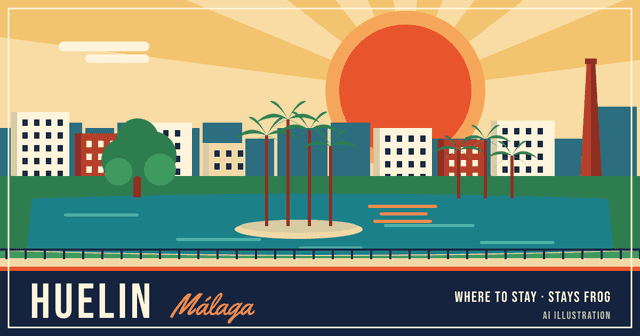
Choose Huelin for a budget beach base among locals: a busy market, a big park and the sea, with the metro to the station and the old town.
A working-class seaside barrio west of the centre beyond María Zambrano, with the busy Mercado de Huelin, the tree-filled Parque de Huelin, the western beaches and tapas on Calle Tomás Echeverría.
How it scores
- Food
- 7/10
Tapas bars on Calle Tomás Echeverría and the Mercado de Huelin, with more stalls than any market but Atarazanas
- Nightlife
- 4/10
Evening tapas and drinks with neighbours on Calle Tomás Echeverría; otherwise calm at night
- Shopping
- 6/10
The busy 1974 Mercado de Huelin is the shopping hub; very little here is aimed at tourists
- Walkability
- 8/10
Market, park and Huelin beach close together; the seafront promenade runs west to La Misericordia
- Transit
- 7/10
Princesa-Huelin metro on line 2 to El Perchel and Guadalmedina; C-1 to the airport from María Zambrano
- Coolness
- 7/10
Málaga's first planned workers' barrio, 19th-century chimneys at La Misericordia and everyday local life
- Safety
- 7/10
Comfortable by day with families at the market and park; watch beach bags and use lit avenues late
- Loudness
- 5/10
Calm at night apart from the bars on Calle Tomás Echeverría; daytime bustle at the market and park
Each category is scored 1-10 by our editors; the Frog Score is their average. Safety is our editors' judgment of how comfortable it is to walk around, not crime statistics. Loudness runs from library quiet (1) to never sleeps (10) and doesn't count toward the Frog Score. How we score
Our take
Huelin is a working-class seaside barrio west of the centre, beyond María Zambrano station, built in the 19th century as Málaga's first planned workers' neighbourhood. Today it is a lived-in mix of old low houses and newer blocks of different heights, with a busy municipal market, the Parque de Huelin and the western beaches on its doorstep, and very little aimed at tourists. Calle Tomás Echeverría is the main street for bars and restaurants, and it is one of the most authentic everyday neighbourhoods in the city.
Choose Huelin if you want the sea and local life for less than the centre costs, and don't mind a metro or bus ride to the museums. It suits longer stays, families and repeat visitors, mostly in apartments. For a hotel, Barceló Málaga at María Zambrano station is about a ten-minute walk from the Huelin and San Andrés beaches, and ILUNION Málaga, with a spa and indoor pool, is on Paseo Antonio Machado, the seafront avenue that runs along the neighbourhood's edge.
Mornings start at the Mercado de Huelin, a municipal market dating from 1974 with more stalls than any in Málaga except Atarazanas, plus a café, and with the María Zambrano public library next door. The Parque de Huelin, laid out on the site of an old ironworks, has more than 700 trees, two artificial lakes and play areas, and the promenade runs west along the beaches toward La Misericordia, where chimneys from 19th-century industrial Málaga still stand. The Iglesia de San Patricio, with its Gothic and Mudéjar touches, is the parish church, and in the evening Calle Tomás Echeverría is the place for tapas and a drink with the neighbours.
The metro's Princesa-Huelin station, on line 2, runs to El Perchel for María Zambrano station and on to Guadalmedina on the edge of the old town, and from María Zambrano the C-1 suburban train reaches the airport, about 8 km southwest of the centre, every 20 minutes or so. Huelin feels comfortable by day, full of families at the market and in the park, and calm at night apart from the bars on Tomás Echeverría. On the beach, don't leave bags unattended and follow the lifeguards' flags, and on late walks back from the centre stay on the lit main avenues and the seafront rather than cutting through quiet side streets.
By Stays Frog AI Desk
A short history
Huelin was Málaga's first neighbourhood designed for workers: in 1868 the industrialist Eduardo Huelin Reissig, who gave it his name, presented a project for workers' housing beside the La Constancia ironworks and the Industria Malagueña textile mill on the city's industrial western edge. Málaga had industrialised fast from the 1830s, and instead of the crowded corralones of the day the plan laid out single-family houses in small blocks, with two-storey corner houses for foremen, a church, a dispensary and a school. Textile, tobacco, metal, flour-milling and railway works grew up around it, the parish of San Patricio was founded in 1891, and its present church was completed in 1950. As the factories closed their land was reused: the Parque de Huelin was laid out on the site of La Constancia, one of Spain's early blast furnaces, and the old Tabacalera tobacco factory nearby opened as a museum in 2015. Some of the original houses survive on Calle Villarroel, in a barrio that keeps much of its maritime, working-class character.
No places in Huelin scored yet.
Traveller reviews
What people who've been say. One review each; you can update yours.
References(11)
Primary sources used to check this guide and its listings.
- Mercado de Huelin · Primary city / venue source
- Málaga municipal neighbourhood polygons — Huelin · Ayuntamiento de Málaga — Sistema de Información Cartográfica; CC BY 4.0
- Safety and security - Spain travel advice - GOV.UK · UK Foreign, Commonwealth & Development Office — current visitor-safety guidance
- Huelin · Wikipedia (Spanish)
- Playa de San Andrés · Ayuntamiento de Málaga
- Playa de La Misericordia · Ayuntamiento de Málaga
- Barceló Málaga · Barceló Hotel Group (official site)
- ILUNION Málaga · ILUNION Hotels (official site)
- Málaga Metro · Wikipedia (English)
- Línea C-1 (Cercanías Málaga) · Wikipedia (Spanish)
- Málaga Airport · Wikipedia (English)